Old San Juan, Puerto Rico: sustainable by foot and fork
| El Morro to Mofongo |
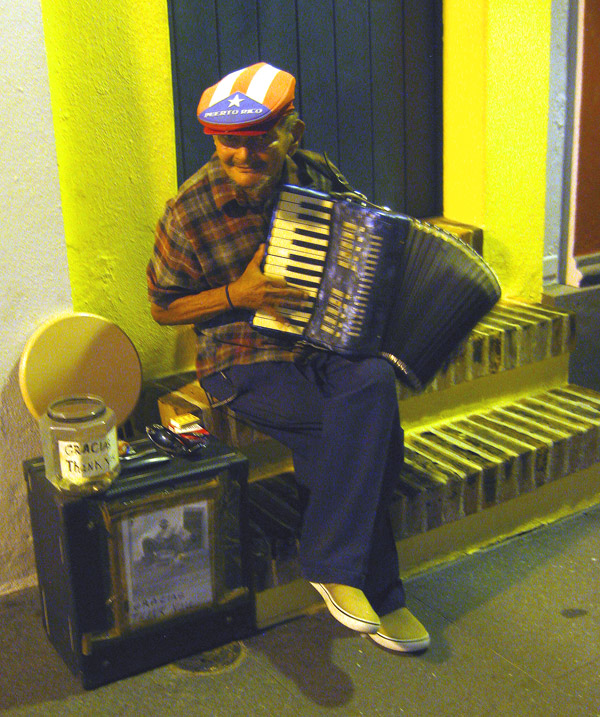
Wandering the narrow streets of Old San Juan is like discovering the perfect recipe for how to blend the flavors and textures of colonial Spain with the tropics. Think Old Havana with a recent paint job and lots of restoration. The streets are clean, safe as any city, and they’re paved with blue-glazed cobblestones cast from furnace slag brought over as ballast on Spanish galleons. More than 400 buildings dating from the 16th- and 17th-centuries—adorned with intricate wrought ironwork and magisterial entry doors—have been lovingly restored and splashed with Caribbean color.
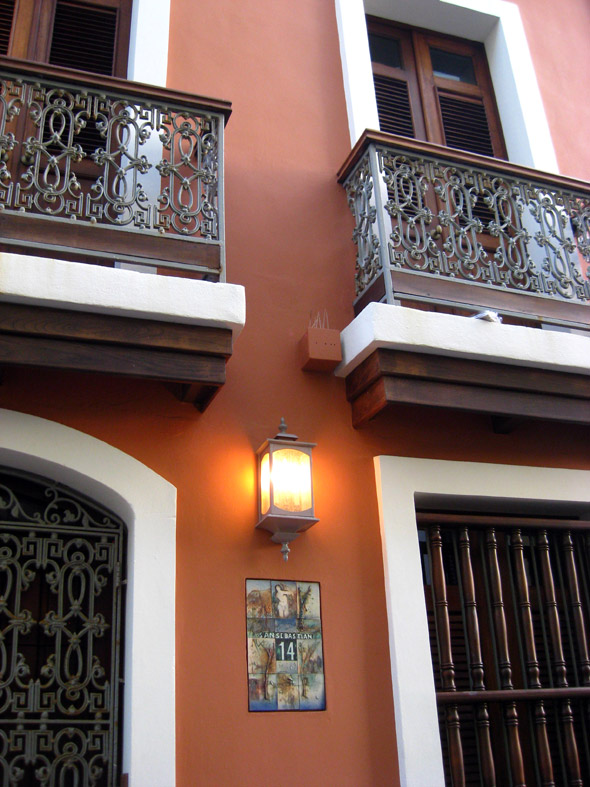
Colorful casas: 400+ restored 16th & 17th century buildings
This is an art-loving place, from vibrant vejigante masks worn at Carnival time to wry, modern public art in plazas and parks ….

Sunset in Old San Juan: an art-loving place
… To major art museums within walking distance of each other: the Museo de Arte de Puerto Rico, which depicts the sweep of island art history, and the Museo de Arte Contemporáneo de Puerto Rico in a handsome former school building that hosts courtyard exhibitions of recent works by local and Puerto Rican-born artists. Both are very inexpensive to tour.
The Introductory Stroll of Old San Juan can take as little as a morning (avoid the afternoon heat), or can reasonably be stretched out to several mornings and late afternoons. It definitely must include an homage to the two main fortifications that served the Spaniards so well, foiling all attackers, including the English navigator Sir Francis Drake in 1595.
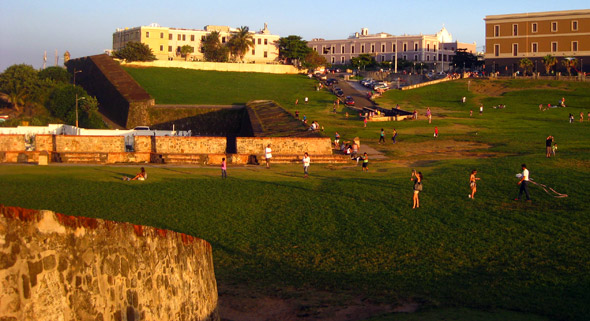
El Morro parade grounds: a vast urban playground
Both castle forts are maintained today by the U.S. Park Service and can be explored, but even a meander across the vast parade grounds of the Castillo San Felipe del Morro (informally known as El Morro), used as an urban playground for kite flying, picnicking, lovers’ walks and impromptu games, is mighty satisfying under skies of a deep blue sailed ceaselessly by billowy white frigates. The shining sea surrounds on three sides; at your back, grand public buildings of this charming old city. Sunset brings spectacular cocktail colors—pink, orange, yellow.
Serendipity by foot
Like the two castles on a chess board, a short walk away is El Morro’s counterpart as guardian of the bay, Castillo de San Cristóbal. It consists of five independent fortresses linked by moat and tunnel. El Morro, San Cristóbal, plus two more forts and most of the city’s imposing defensive wall are designated a UN World Heritage Site.
There’s lots more to see and do, and the street life, especially in the parks and plazas can be quirky and fun. We happen upon street musicians, balloon vendors and some giggly women dancers in riotously colorful Caribbean dresses who are eager to pose for us. The serendipitous discoveries are always the best, like the narrow lane that ends with uniformed sentries and the grandiose governor’s mansion.
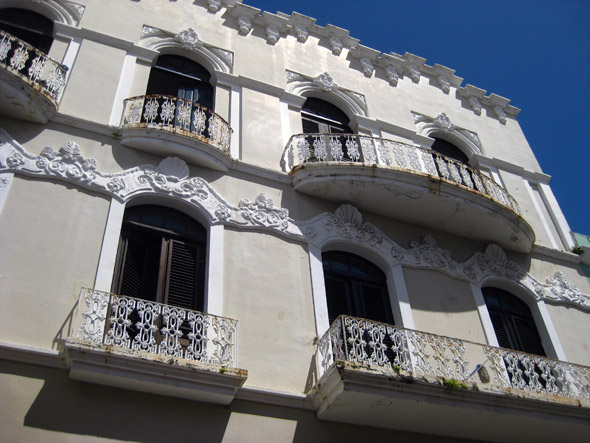
Spanish colonial gem in Old San Juan
And, of course, there’s plenty more to this city of 400,000+ residents than the historic district. The golden sands of Isla Verde, for example, where most of the big hotels are. You don’t have to be staying at one of them to enjoy the beach. And the Miami Beach-like Condado district, which has its own beachfront, as well most of the city’s chic-est bars and clubs.
But where to eat?
Always on Saturdays
Naturally, as in every big city, the number of choices is dizzying. But we’re limiting ourselves to sustainable (mainly organic) fare from island farms, and so now, unfortunately, the choices narrow considerably. On Saturdays (8 a.m.–1 p.m.), the most sustainability-minded chefs in the city shop at the Mercado Agricola Natural, San Juan’s only organic farmers’ market. It’s on Calle Norzagaray, in the San Juan Museum. Some two dozen vendors offer fresh, locally grown fruits and vegetables, plus artisan products like cheese, coffee, breads, sauces, juices and therapeutic oils. And if you’re hungry, this is a great place for prepared organic and vegetarian meals and snack foods, or even cocos frios (cold coconut water), fruit sorbets and batidos (smoothies).
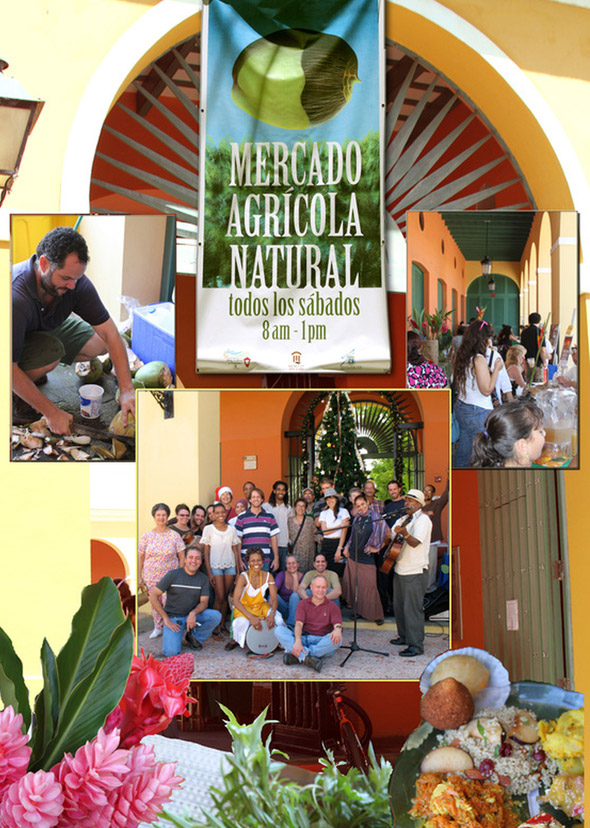
Old San Juan’s organic farmers’ market: always on Saturdays
But if you have time for only one unforgettable meal in Old San Juan, we wholeheartedly recommend dinner at Marmalade. Why? Here is our story of one of the best meals we’ve had in the tropics:
As we enter from a darkened Fortaleza Street, we feel immediately welcomed by a decor in soothing Pez colors. It happens to be a special night for us, a celebration, a fact we mentioned when making our reservation. But that still does not prepare us for the white flower petals strewn across our waiting table. We begin to understand we’re in for something special tonight.
Save room for No No Cake!
Even a quick gaze over the cocktail menu confirms our thinking. It’s mixology worthy of a trendy pub back home in San Francisco. How could we not go for what’s been ironically dubbed the Global Warming? It’s described as a “transitional cocktail”—a fiery three-chili spherical ice cube slowly melts into a hibiscus and basil infused margarita—that warns “the longer we wait, the hotter it’s going to get.” If only real global warming were so amusing!
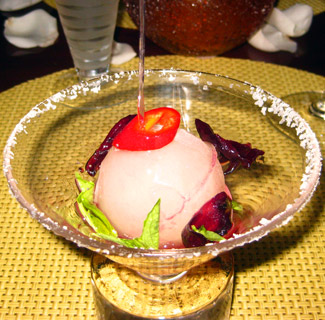
Marmalade’s Global Warming cocktail as the margarita is poured over the fiery ice: the longer we wait, the hotter it’s going to get
The seasonal menu is equally intriguing. Four- to six-course tasting menus (including a vegetarian option and pairings with sustainable wines) are available but we decide to go a la carte. A delicate “cauliflower mezza.” Popcorn shrimp ( lacquered with añejo tequila and resting atop poblano guacamole and heirloom ancho-chili spiced popcorn). Spaghetti squash lathered in a curry spume. A yellowtail poke with a mini-snifter of nigori sake. Ceviche verde, an artful array of pea pod, broccoli, sprouts, cucumber and sunflower seeds in a refreshing lime-based dressing. Halibut cheeks in a Spanish-style stew with paprika, clams and aged chorizo. (Marmalade adheres to the sustainable seafood recommendations of the Monterey Bay Aquarium Seafood Watch.) All of it is totally delicious, and, on another night, we could easily choose the enticing preparations of organic, grass-fed beef or lamb.
And then, dessert. Let’s just preface this by saying one of us, who adores desserts, is gluten intolerant and so is frequently disappointed at her choices when we eat out (especially beyond major U.S. cities). But not here. No. Here we both thoroughly enjoy the moist Chai Spiced “No No” Cake with its blueberry lavender sauce (described on the menu as follows: “let’s start with what is not inside … no gluten, no eggs, no dairy, no nuts, no refined sugar of any kind, no GMOs … everything organic … now we have your attention”).
A chef to be reckoned with
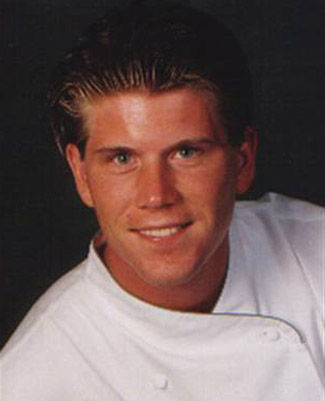 We have to meet the mad genius in the kitchen behind all this. He’s not Puerto Rican. But he’s probably more plugged into the real Puerto Rico than many of his fellow citizens of San Juan—because he courts and befriends small organic farmers and sustainable fishermen throughout the island. He’s even coaxed one farmer to grow beets for him … in the tropics … at 2,500 feet up in one the island’s mountainous regions. This self-confessed “obsessive perfectionist” is Peter Schintler, and he hails from Iowa. Along the way he’s done cooking time in Ireland; the renowned Le Manior aux Quat Saisons in Oxfordshire, England; the iconic Greenbrier Resort in West Virginia; famed La Cirque in Manhattan; Italy’s most noted truffle restaurant, La Contea; and the Shangri-La Hotel’s Blu Restaurant in Singapore.
He appears at our table. He’s an imposing presence, tall and broad-shouldered, obviously a force to be reckoned with. “Sourcing isn’t easy,” he admits with a shrug. “Organic farming is happening but it’s limited. I will buy goat raised here, but not beef, which is finished with GMO corn and fed hormones and antibiotics.” He doesn’t kid himself about the realities of the island he has adopted. “I think it will be another 10 years before sophisticated, affluent Puerto Ricans think green—until they want, say, green weddings. We still have no public recycling on the island. I pay to recycle. I donate my fry oil to two companies to make into biofuel.”
Nonetheless, in the nine years Schintler and his wife, Henriett, have been in business, he believes they’ve changed the way his mainstay customers—those selfsame sophisticated, affluent Puerto Ricans—eat. We believe him. Marmalade’s focus on lighter, healthier and non-GMO-based ingredients, plus the innovative showcasing of vegetables, represents a complete about-face from the traditional island diet of deep fried meats and starches. We recall the quip of another resident who resettled here from the U.S. mainland: “If the Puerto Ricans could deep-fry lettuce, they would.”
What Lola wants, so will you
Schintler’s food, great as it is, cannot be called Puerto Rican. So who, if anyone, is leading the way in showing that classic island cuisine can be done in updated, sustainable ways? The answer to that question leads to a chef of Puerto Rican heritage who grew up in California’s Silicon Valley but is now Puerto Rico’s TV celebrity chef. You may have seen him on the Food Network’s Iron Chef: America and The Next Iron Chef. His name is Roberto Treviño, and he’s got a mini restaurant empire going in San Juan, but we’re most interested in one of his latest offerings, Casa Lola.

The eponymous Lola: an homage to an island legend
It’s not in Old San Juan, but about 10 minutes away by taxi in the Condado district, in a festive, flamingo-pink house with views to a lagoon where you can dine while watching sea birds skim effortlessly over the blue water. This House of Lola is named in honor of Lola Milagros Cedeño, described as “a great woman with a strong character and a big heart” who gained fame for herself and good fortune for her employers, a well-to-do family, with her cooking, intelligence and wit.
Treviño says his “criollo kitchen” menu is inspired by Lola’s own traditional recipes, yet there’s no doubt he’s kicked things up several notches. “Everything is fresh,” assures our own Lola, a mesera (waitress) with a Rachel Ray smile named Neldys. We start with a Puerto Rican standard: a trio of arepas, pockets of filling encased in dough that are cousins to Salvadoran pupusas or Mexican gorditas. Yup, they’re fried—perfectly, we should add—and filled with garlic shrimp, stewed beef and seasoned crabmeat. Next up is pulpo a la plancha, meltingly tender octopus with a passion fruit sauce accompanied by slivers of salted plantain “chips.” The Lola mixta garden salad stars wild arugula, beet root, sliced almonds and crispy garbanzos. If you order the whole, boneless yellowtail snapper (a sustainable fish), as we do, ask for the housemade ajillas chili verde salsa to go with it—they pair beautifully, and complement the seafood mamposteao rice that accompanies this dish. We’re slowing down by now. Even updated and lightened by an Iron Chef, this is fare for hearty appetites. Luckily, we save enough room for what turns out to be the star of our luncheon: seafood mofongo de yuca with salsa de Lola.
Viva mofongo!
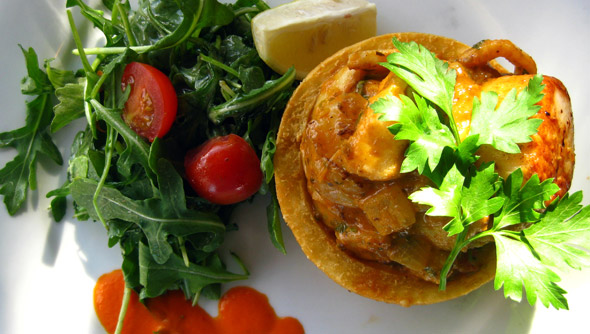
A kicked-up mofongo: seafood atop yucca
Mofongo is to Puerto Rico what borscht is to the Ukraine or gyros are to Greeks. Fundamental. Universal. It is typically made with fried green plantains mashed together in a pilón (a wooden mortar and pestle), with broth, garlic, olive oil, and pork cracklings or bits of bacon. It is often filled with vegetables, chicken, crab, shrimp or beef. In our case, the mofongo is a made from mashed yucca root formed into a shell that’s filled with scallops, fish, shrimp and calamari, then topped with a slightly piquant red crioll0 sauce. Truly scrumptious.
We have not the teensiest room left for dessert, so of course we order one. At Neldys’ suggestion, it’s the bread pudding al estilo Lola (in the style of Lola), decadent beignet-sized balls of heaven studded in raisins and coconut and slathered with a dulce de leche sauce. My oh my sums it up.
So does: it’s nap time! But nap time in the tropics at midday is not anything like nap time when you’re two. It’s tradition, it’s natural, it’s irresistible, it can even be lots of fun. So please excuse us. We’ll continue our hunt for the best green diversions of Puerto Rico when our heads are clear again and our appetites have rebounded. Hasta luego!